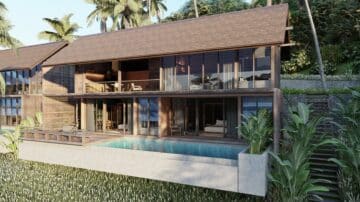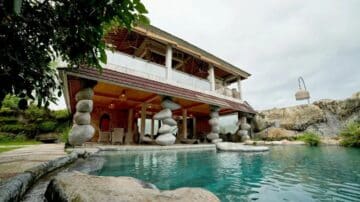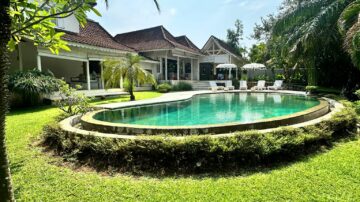
Location Villa Bali  Villa In Bali

All About Bali

Explore the Best Bali Has to Offer

bali luxury villas

Bali's icon of luxury the khayangan estate

Sailing & Cruises

March 21st, 2008

The 13,677 islands of the Indonesian archipelago stretching over an area of 5,200 km into the Pacific ocean present a plethora of choices for “boaties” to explore. Bali has three main ports – Benoa in the south, Padang Bai in the east, and Gilimanuk in the west. Several major shipping line make Padang Bai and Benoa their ports of call on around-the-world cruises.

If you would like to explore the islands near Bali you have a wide range of choices from boating expeditions with anything from a few hours in a traditional jukung to day cruises or longer overnights trips on yachts or luxury cruisers.

Ombak Putih, a traditional Bugis schooner, is one of the most exotic way to explore Indonesia ‘s islands. Measuring 36 meters in length, 10 meters in beam, and 4.5 meters in draft, it consists of one main deck and one sun deck. This stunning-looking schooner is powered by a capacity 10, 40HP engine and has a maximum speed of 10-12 knots under sail. I can accommodate 24 passengers in its 12 cabins. Safety is given the utmost priority with provision of life rafts, life buoys, and live jackets. High tech navigation equipments such as radar, GPS, and depth sounder assures that your sea journey is smooth, safe, and fast, and hi-tech communication equipment permits constant contacts with the outside world. All passenger cabins are fitted with their own shower, toilet, and air-conditioner.

Until October Ombak Putih operates the Volcanoes & Dragons Schedule with 2-das, 3-days, and 10-days cruises from and to Bali with visits to the Lesser Sunda Islands . After October until March the Bugis & Spice Schedule is operated with cruises of from 7-10 days. Destinations covered include Sulawesi , Sumbawa , Komodo, and Flores . All fares are inclusive of buffet meals during the trip, soft drinks, tea, and coffee, excursions, laundry service, use of snorkeling and water-skiing equipment, and services of a tour guide.

Sea Safari Cruises also offers a wide choice of cruises aboard its Sea Safari III (SS3) and Sea Safari V (SS5). Built in the traditional style of the type of schooners used by Bugis pirates at the turn of the century, both vessels combine the best of Indonesian boat-making skills with all the comforts you would expect from a modern ship.

On both vessels all cabins have a bathroom and basin, toilet and shower, individually controlled air-conditioning, and tea/coffee making facilities. Other facilities on the schooners include toiletries in each cabin, swim/boarding platform, fresh water on-deck shower, laundry, bar, TV, karaoke, and VCD entertainment units, scuba diving and snorkeling equipment, warm towel for after night diving, fishing equipment, and water skiing equipment. For meal delicious Asian and European cuisines are served, and vegetarian food is available on request.

Cruises offered by Sea Safari are of the following durations: 3 nights / 4 days, 4 nights / 5 days, 5 nights / 6 days, and 7 nights / 8 days. Among others, some of the destinations covered are Sangeang, Sabolan, Komodo, Lombok , Satona Island , Sumba , and West Flores . When you combine the intimate knowledge of the Sea Safari Tour Director on the local culture and customs with the superb condition of the ships’ crew, you are guaranteed an exciting time in both your shore excursions and underwater adventure.

Bali Hai Cruises offers four cruises. The Aristocrat is a twenty-meters twin hulled sailing catamaran used to carry small group from Benoa Harbor to Bali Hai’s private Beach Club on Lembongan Island . The Aristocrat is also available for private charter.

The Bali Hai Reef Cruise, aboard a motorized catamaran, moors alongside a pontoon in Lembongan Bay . Visitors can see the coral reefs and marine life on glass-bottom boats, or by snorkeling and diving. There are unlimited banana boat rides and a cultural tour of the island. A luncheon buffet is served on board.

The Bali Hai Beach Club Cruise takes visitors to Beach Club on Lembongan Island . The club features a landscaped garden and lagoon pool. You can just relax or dive, snorkel, play volley ball, go on island excursions, or unlimited banana boat rides. BBQ lunch lunch is served at the pool side cabana.

The Bai Hai Sunset Dinner Cruise leaves Benoa Harbor every evening with buffet dinner, live Batak singers, and a disco.

Beluga Marina in Tanjung Benoa have cruises to the island of Nusa Penida aboard the Quicksilver catamaran, which will moor alongside a pontoon. Guests can visit the village of Bodong or scuba dive and snorkel. They can also view the coral from the semi submersible vessel or from the underwater observatory on the pontoon. Unlimited banana boat rides are available and a buffet lunch is served on the pontoon. Beluga also has sunset cruise, dolphin spotting cruise, and submarine safaris.

Island Explorer Cruises has day cruises to Lembongan by yacht or power boat and can arrange an overnight stay on the island. They also have sunset cruises, dolphin cruise to Uluwatu by catamaran.

Rasa Yacht also sails Lembongan for day cruises and have two daily cruises to the waters of West Bali with a maximum of 12 people. You can go fishing, dolphin spotting, or sunset cruising.

Wakalouka Cruises luxury 23 meters catamaran takes limited number of guests to their Wakalouka resort on Lembongan Island . The resort has ten luxury bungalows for overnight stay. On offer, too, are special package called “Wakalouka Experience”, which consist of three to six days duration combining sailing and diving trips to Wakaloukas’s island and visits to mountain resorts.

Climb aboard the Simone III run by PT Indonusa if you would like to try game fishing. A state of the art Blackwatch game fishing vessel, Simone III is also available for private charters for surf diving tours or extended fishing trips. Tuna, wahoo, mackerel, marlin, mai-mai, snapper, cod and coral trout are some of the fish that can be caught within a range of 30 minutes to an hour from Bali . Buffet lunch and refreshments are provided on board.

If you want to go to Lombok by sea, enjoy the splendour and beauty of the Gili islands is to go on a cruise on the five stars luxury catamaran, The Bounty Cruises.

Equipped with international standard safety equipment and computerized stabilizer, it makes the sea journey from Benoa Harbor to Gili Meno in just two and a half hours. During the journey, guests can enjoy deck games and in-house video or simply sun-bathe. At the island, The Bounty Cruises will moor alongside a pontoon, allowing opportunities for snorkeling or scuba diving. The blue tinted staghorn corals are one of the attractions here. One can also take a glass-bottom boat ride to the private beach to enjoy volleyball, parasailing, seafood BBQ, or banana boat rides, a jet powered sea shuttle. The trip takes two and a half hours and refreshments are served on board.

One of the easiest ways to travel to Lombok from Bali is by the high speed catamaran of Kencana Lines. Having a maximum seating capacity of 117 persons it is divided into smoking/non-smoking areas. Snack and mineral water are served during the journey, and on-board facilities include AC, VCD, and karaoke. Daily the catamaran leaves Bali ‘s Benoa Harbor at 8am and reaches Lembar in Lombok at 12noon. The return trip back is at 4.30pm reaching Benoa Harbour at 8.30pm .

Aloha Sailing Tours offer a totally different sailing experience on their fleet of hobie cats and lasers. Operating on the beach near Intercontinental Resort in Jimbaran, they have guided tours of Jimbaran Bay and a four-day safari which begins in the north of Bali at Lovina and finishes at Amed. There is also a children’s sailing school.

Sea Trek offers extended sea voyages from 8-18 days aboard Buginese schooners (phinisi) to such destinations as the Lesser Sunda Islands , Moluccas , Irian Jaya, and Sulawesi . Giving high priority to the environment, Sea Trek’s way of traveling does not disrupt the local infrastructure or local traditions. All non biological garbage is bought back to shore and the engines of their ships have been developed to modern standards.

Overview

March 21st, 2008

Welcome to Bali, a tropical island where the soil is so rich and fertile that the land is constantly carpeted in a wild sea of green. Welcome to the place where the people are closely connected to this land and to the spirits which have shaped it. A colorful culture which resolves around the care of this land in a natural and rhythmic way, where the people regularly offer grand mounds of flowers and fruits at stone temples, swathed in bright woven golds, pinks, and purples.

You have arrived on an island where there is the space for exploring wide sandy palm-edged beaches, or for simply drawing in the sun and the sea. Here there is the opportunity for trekking through jungles and paddies, or for wading in springs and soaking in mountain views… and an abundance of time to do it all in.

Bali is an island paradise which has, for generations now, been the favorite destination of a range of discerning travelers. People have come here for the culture, for the tropical environment, for the beaches. For the diving, the food, the surfing, the shopping. People come here to unwind, become inspired, or experience the ultimate adventure. Bali is the island which has it all.

Bali is, in fact, the centre of a sting of islands that make up the Indonesian archipelago from Sumatra through Papua. Wedged in between Java, the most highly populated and influential island, and Lombok , one of the quieter and more slow paced state, Bali has developed as a world of its own. In one sense, Bali captures so much of what is special about Indonesia , and yet is another it is also unique.

Amongst the 13,700 Indonesian islands (900 of which are inhabited), Bali is the only Hindu state, and the rich blend of tradition and culture has had a incredible impact. Also, Bali is the last island running east to have a distinctly tropical Asian environment. Any islands east of Bali lie east of the Wallace line and life forms show signs of having a greater Australian and New Guinean influence. Strangely enough, it is also considered to be the most western of the Lesser Sunda Islands , which stretch as far as New Guinea .

Geographically, Bali is the ideal location for such colorful and deeply spiritual culture. In fact geography of the island has, most probably, actually been responsible or the extensive and fascinating cultural development.

Even though it is relatively small, approximately 5,000 square kilometers in all, Bali boasts a whole range of different environments. This compact landscape centers around a line of active volcanoes with alluvial slopes which spill down to coastal plains. Tropical ra info rests fringe the mountains, eventually giving way to carefully cultivated rice fields and crop growth. Future down on the plains, water-logged mangrove swamps lead to the ocean. A number of different rivers and streams, in turn, wind their way through a cross section of these environments and down to the coast, carving deep chasms as they go.

Bali enjoys a consistently warm climate, which is particularly mild in the dry season, and the mountains ensure there is a steady rainfall to periodically cool the island down through the rainy season. The mountainous regions maintain a refreshing temperature all year round, and can provide a great break from the greater heat and humidity of the plains.

The people of Bali , as diverse as the geography of the different regions and yet united by their strong religious beliefs, draw their strength and their meaning from this wonderful environment.

The mountains are the focus of all daily activities, with holy Mount Agung as the great heavenward inspiration. All villages, temples, family compounds, houses and furniture arrangements are designed to the face of “kaja”, or towards the mountains. The seaward direction “kelod”, on the other hand, is considered to be less sacred and at times impure, although the sea itself is not considered to be profane.

Mountain slopes provide the ideal setting for the luminous terraced rice paddies, which then transform to become vast paddied field. The Balinese have an ingenious irrigation system which keeps these paddies well watered, and the rich nutrients from the volcanic ash ensure these fields are also well fertilized.

Rice is the staple food for all Balinese people, and sampling the steamed rice (nasi putih), red rice (nasi merah), or even yellow colored rice (nasi kuning) is a must. Or try a mixed rice dish served with different condiments (nasi campur) or fried rice (nasi goreng), even some sticky rice patties. Rice also has sacred significance, and it is offered back to the gods in the form of brightly colored cakes, or even simply as a few grains sprinkled on a banana leaf. Dewi Sri, the Balinese rice goddess, features strongly in local mythology and religious observance, and she often appears as “cilli” figure cut and bound from rice stalks.

The rivers are a focus for rural village life, as they are a source of water for both work and domestic activities. You will often find whole villages bathing in the rivers, washing their clothes, washing their cars, fishing from them, or simply splashing around and having a great time. Further down the river path, many of the mud flats near the sea continue to be used by small family groups for making salt, an essential condiment in Bali .

At the edges of the land, the oceans are a source of holy water and the channel for preparing the dead for their afterlife. But there is still a great fear of the sea as the unknown, so even though fishing and seaweed farming are reasonably widespread and many activities revolve around the surrounding ocean, it is treated with great respect.

As a visitor, it is difficult not to be drawn in to the inherent magic of a place where the people draw so much meaning from the land and its spirits. You will see this magic in the long processions of flower and fruit-laden villagers on their way to the temples, or in the glittering dancers acting out an ancient Hindu story. You can her it in the lively clashes and clangs of the gamelan orchestra, or the quiet whispers of continually offered prayers. It is easy to sense the magic in the taste of an island with an abundance of fresh fruits and vegetables, and the aromas of sweet incense. And, naturally, the magical feeling is palpable.

While in Bali , you may choose to participate in this magic by visiting one of the large number of temples, with ancient Hindu symbols carved in huge slabs of stones. Or you may be lucky enough to have the opportunity to observe a temple festival or public cremation. You will, most likely, also want to at least see one of Bali ‘s famous dances.

Grab the opportunity if you can, to see the graceful welcoming dance, in which young girls tilt their heads and move rhythmically to the gamelan beat, sharing their flower offerings with all. Another must see is the kecak dance, a hypnotic chant performed by scores of men circled around a fire, where scenes from the Ramayana are reenacted. Or the legong dance, which includes a series of different dance scenes and styles, is always worthwhile.

For the more adventurous, there is always the opportunity to go trekking, four-wheel driving, white water rafting, and ride elephants or camels! There is nothing quite as exhilarating and spectacular as rushing down a river canyon or trekking through thick matted forests. It is always possible to feel some of that tribal Balinese magic when you venture out into the more wilderness areas of Bali .

Or you may just be content to enjoy the beautiful beaches and countryside, knowing that the spirits are with you. How can you not know when there are constant reminders of their presence?

Wherever you are, and whatever you choose to do, enjoy the warm smiles and open embrace of a people who appreciate their whole way of life and would love to share some of its magic with you. The traditional prayer position of the hands and bow from the heart are welcoming gestures designed to recognize and honor your soul, and they are a true indication of your important as a visitor to Bali . “Selamat dating”, you are always very welcomed in Bali.

Visa Regulation

March 21st, 2008

Before leaving your country please make sure that you have understood Indonesian regulations for arriving foreign visitors. For those who does not even aware about this fact, Bali is a part of a South-East Asian country names Indonesia.

Following is the latest regulation on issuing visa.

Visa Free

Only applicable for nationals of the following 11 countries and territories: Brunei Darussalam, Chile, Hong Kong, Macau, Malaysia, Morocco, Peru, the Philippines, Singapore, Thailand and Vietnam.

Citizens of the above countries/territories will be issued a stay permit for 30 days free of charge upon presentation of a passport which should be valid at least for the next 6 months. This permit cannot be extended or converted into another type of visa.

Visa on Arrival (VoA)

This facility is applicable for nationals of the following countries: Argentina, Australia, Brazil, Canada, Denmark, Finland, France, Germany, Hungary, Italy, Japan, New Zealand, Norway, Poland, South Africa, South Korea, Switzerland, Taiwan, United Arab Emirates, United Kingdom and the United States of America.

Citizens of the above countries can apply for a VoA valid for 3 or 30 days upon arrival.
A 3-day visa costs US$10 and a 30-day visa costs US$25.

VoA cannot be extended or converted into any other kind of visa. Bbe aware that your arrival day is counted as your first day and you must leave the country on the 30th day.

Travelers from the above countries shoudl provide of a passport which is valid for at least 6 months from the date of arrival and completed embarkation/disembarkation card received from the airline. They also have to prove that they have enough money for their stay in Indonesia.

Arriving travelers with Visa-On-Arrival status have to go first to of VoA Counters to pay the fee and have their passports stamped before proceeding to immigration clearance desks. An official bank is part of the VoA service counters. Payment of visa fees can only be made in US dollar bank notes, equivalent Indonesian Rupiah, or credit card (VISA or MASTERCARD).

Visa Before Arrival

Citizens of countries which is not on VoA nor Visa-Free lists are required to apply for a visa through Indonesian overseas embassy/consulate before travelling to Indonesia. Nationals of all countries planning to stay for more than 30 days in Indonesia also have to apply for the appropriate visa through Indonesian overseas embassy/consulate before travelling to Indonesia.

Tabanan

March 20th, 2008

The Regency is just west of Badung stretching from the coastline of massive black rocks up to the central mountains. Tabanan is an unspoilt of Bali which is also richly fertile, containing the best agricultute and a place to give peace and prosperity to their villagers. In the northwest is a dense forest is part of the wild and natural park. Before the dutch took control over Tabanan the kingdom was ruled by Ngurah Agung Tabanan who died in 1903 after having ruled the Regency since 1844. He left two wives brought up in an old tradition that declared that they would commit “Suttee” at the cremation seven months later. The two old women beautifully dressed in white walked along specially constructed bamboo paths. At the time the Dutch Resident declared that this was the last “Suttee” allowed though the tradition did continue covertly for a while afterwards.

MT. BATUKARU

This 2,278 meters peak towers over the local landscape and strongly influence local spiritual beliefs. All local temples have a shire dedicated to the spirit of the “coconut shell ” mountain and high on its slopes is the public (Kayangan Jagat)
Temple of pura Luhur Watukaru.

BEDUGUL

In the center highland of Bali is the serene mountain area of Bedugul. Here vegetables, fruits, and flowers thrive in the alpine climate and a colorful little market at Bukit Mungsu offers a wide selection of products including exotic wild orchids, roses, and colorful birds. There is a large botanical garden nearby. At Pancasari, an 18 – hole championship golf course has been developed with all the facilities to suit golfing lovers. At Lake Beratan, the area’s climate is refreshing after being in the heat of the lowlands. Bratan approximately 60 kilometers from Denpasar (to the north) also provides exciting surrounding with cool fresh mountain air.

ALAS KEDATON

Located about 20 km north of Tanah Lot temple this forest is inhabited by hundreds of monkeys that live amicably. There is a temple where one find something unique happens. It is when a ritual ceremony held there, no one is allowed to use any kind of fire offering equipment, such as incense and candle. Tens of big bats dwell on the tips of leaves of big trees attract the visitors who come there.

TANAH LOT

Carved out of the landscape by tides, wind, and rain, the huge offshore sentinel rock of Tanah Lot supports a small picturesque sea temple which can be reached by a scramble over the wet rocks. These are reputed to be several large caves just below the water line at the base of the rock which shelter large sea snakes who are the guardians of the temple.

KRAMBITAN

The village of Krambitan at the southwest of Tabanan was once an extension of the ruling Raja’s court and is still a cultural stronghold with music groups maintaining ancient custom of music and dance using bamboo instruments.

JATILUWIH

Approximately 20 kilometers from Tabanan the road climbs up high into the hills to a small village named Jatiluwih. With a height of 850 meters above sea level, the view here is one of the finest imagineable. Bali’s terraced paddy fields stretch into endless contours over the hills and valleys as far as the eye can see.

The main place to stay in Tabanan is the mountain resort of Bedugul, famed for its cool climate and spectacular lakes, mountains and rice fields. Penebel offers hot springs with modern facilities. Krambitan is the place for an unusual stay in a royal palace. Tabanan’s west coast is being developed as Bali’s newest beach resort with miles of deserted black sand and a pounding surf.

Bedugul

A pleasant climate, splendid views, water sports on scenic Lake Bratan, botanical gardens, fresh tropical fruits and vegetables, these are but a few of the things Bedugul offers. Located 1,500 m above sea level it gets chilly by late afternoon so bring your sweater. This is a favorite weekend retreat for Jakartans and the local Balinese bourgeoisie.

Getting to know Bedugul

Bedugul’s layout can be somewhat confusing, especially if you arrive in late afternoon after the clouds have descended. Coming from the south, there are two signposts to watch out for: “Bedugul 0.2 km” and “Bedugul.” One might expect to find the village here but instead the road turns sharply to the left with a smaller road leading off to the right. The latter leads to the Bedugul Hotel on the southwestern shore of the lake.

The main road continues past a number of hotels on the left until it reaches the village of Bedugul proper. Here you find shops, a few restaurants, a bank, telephone office (wartel, a market selling local produce including flowers, coffee and vanilla) and a lane leading up to the botanical gardens (Kebun Raya).

Beyond the village the road descends towards the lake, turning left at the Ashram Hotel the road then continues north to Candi Kuning. On the right hand side is the entrance to the Pura Ulun Danu and other temples. A line of souvenir shops indicates the way. A fee of Rp 1,000 is required to enter the temple.

The walk from Bedugul market to the Ashram Hotel takes about 10 minutes. The temples on the shore are another 10 minutes further on. From the market to the entrance of the botanical gardens takes about 15 minutes on foot.

Getting to Bedugul

Bedugul is situated on the main road connecting north and south Bali. It is the perfect place to stop for a night on an island tour. Rent a car and explore the area at you own pace.

If you are going by public transport, catch a bemo from Ubung terminal in Denpasar to Bedugul for Rp 3,000. The fare is the same from Singaraja. The nicest way to get around Bedugul is on foot in the invigorating mountain air. Or charter a bemo carrying up to seven persons for about $10-$20 a day.

The High Read to Bedugul

Most people traveling between the highland resorts of Kintamani and Bedugul travel the circuitous route via Singaraja and the north coast to get from one to another. An alternative route used by very few people leads south through the mountains offering spectacular scenery and a close look at the vanilla and coffee producing area of the island.

The road is good enough for cars or motorbikes although there are several places where deep potholes make driving fast a big risk. It’s best is to allow half a day for the route between Kintamani and Luwus where you meet the main road between Denpasar and Bedugul. This way you can stop along the way, have a coffee in one of the villages and enjoy a leisurely ride.

From Kintamani follow the main road north until just beyond Penulisan and the Tegeh Koripan temple. Take the small road that branches off to the left towards Belantih village. Continue west past Belantih to Lampu and the neighboring village of Catur where the road bends south. Lawak village marks the beginning of the vanilla-growing region where the harvest can often be seen drying in shelters.

After Belok (keep right) head for Pelaga just before the village there’s a sharp right turn which leads to a shortcut west to Lake Bratan. Not many Balinese expose their vehicles to this road though as chances of ruining them or at least getting stuck are pretty high. Another reason to avoid the shortcut and continue south is that the best has yet to come.

Beyond Pelaga and Kiadan the elevated area around Nungkung and Sandakan is extremely beautiful. A bit further ahead lies the Islamic village of Angan Tiga with it’s small mosque. The next village, Kerta, has a police post and even a bank. Past the bank take the right turn to Bedugul (the road continues straight to Denpasar which is only 32 km away). The stretch of road between Kerta and Luwus via Peria is extremely bad. In Luwus you reach the main road. Turn right for Bedugul or left for Mengwi and Denpasar.

Eating in Bedugul

There are only a few restaurants in Bedugul but they do cover a wide price range. Opposite the road leading up to the botanical gardens, on a right hand bend, there are three small eating places serving cheap meals from 6 am to 7 pm. A good meal costs around $1. Try the ferns (sayur paku) at Ananda I. Friendly service.

There are good restaurants in the main hotels: The Bedugul Hotel’s restaurant by the lake serves meals costing around $7. Try the Chinese food at Pacung especially their crab fried rice (nasi goreng kepiting). The Bali Handara’s Kamandalu Restaurant is more up market. Strawberry Hill serves tasty Indonesian favorites, soups, fresh salads, steaks, and fish. On chilly days and evenings savor a drink at Bedugul’s only bar beside a log fire managed by the owners of Poppies in Kuta.

Indonesian food is available in front of Ulun Danu temple in small food stalls, not recommended for those with sensitive stomachs.

Overlooking the temple and a big banyan tree is the Perama Tea House, a small restaurant by the lake. The open-air patio is a pleasant spot for a refreshing cup of tea. Try their pisang bakar Candikuning grilled banana with grated cheese on top.

Ayam Bakar Taliwang Bersaudara is just before the famous Ulun Danu temple and has a view over the temple and the lake. A favorite with locals. The spicy hot dishes from Lombok are just right for the cold weather. Order the sate or tofu if you don’t like too spicy food. $4. Jember Indah is on the higher slopes just outside Bedugul. Cheap east Javanese food and beautiful views down to the sea. Try the soto Madura for $4. Minang Saiyo, in front of Candi Kuning market, sells spicy Sumatran Padang fare.

Bargain, don’t feel reluctant to offer half the asking price. Also available are fresh flowers, including wild orchids and a number of other ornamental plants.

Some small shops selling souvenir crafts are found around Pura Ulun Danu and the lake. Shops in Bedugul Hotel compound sell film.

Bedugul Activities – watersports

A range of water sports are available next to the Ulun Danu temple and at the lakeside hotels such as Bedugul and Lila Graha. The usual rates, including insurance, are as follows:
Motorboat $20 for 30 mins.
Covered Boat $20 for 30 mins.
Water cycle $20 for 15 mins.
Rowboat $15 for 30 mins.

Munduk

The village of Munduk, actually in Buleleng administrative regency, is located on a ridge along the mountain road leading from Wanagiri, just north of Pancasari to Mayong, some 25 km south of Singaraja as the crow flies. Overlooking coffee and clove plantations, the area comprises the pristine Lake Tamblingan with its traditional fishing community, as well as nearby forests, waterfalls, and some of the most beautiful views on the island.

Munduk is a perfect base for treks into the mountainous Balinese hinterland. You can walk to Mt. Lesong (1,860 m), around Lake Tamblingan, or visit the area’s five waterfalls. Munduk is the center for an innovative community tourism development project. The village which has strong links with the Hotel and Tourism Training Institute in Nusa Dua, has set up a number of activites for visitors, centered around Puri Lumbung Cottages.

Munduk Village

Go from Bedugul to Pancasari bemo termnal for Rp 1000, then take a bemo to Munduk for Rp. 1,500. Alternatively hop on the bemo at the Pempatan crossing. If you hire a car or motorbike, drive cautiously on the road down to Munduk, it’s steep and treacherous.

Jatiluwih and Penebel

The hot springs of Penebel and the rice terraces of Jatiluwih make the slopes of the Mount Batukaru (2,276 m) well worth visiting. These areas are most easily reached by bemo from Tabanan or Mengwi in the south via Pacung. The village of Blayu, just north of Mengwi, is worth a stop-off for those interested in handicrafts. It is famous throughout Bali for weaving and woodcarving. Soka Restaurant in Jatiluwih serves good Indonesian and Chinese food for $10.

Tanah Lot

Shortly before Tabanan on the main highway from Denpasar a signboard directs you southwest to Tanah Lot. Alternative access is north of Legian, turning west toward Canggu, following the signs to Tanah Lot. There are a number of shops and restaurants nearby. Tourists congregate at this Balinese landmark by the busloads at sunset.

Eating in Tanah Lot

Recommended are Dewi Sinta Restaurant at the hotel of the same name and Bali Lestari Restaurant. Several upscale dining outlets are at Le Meriden Resort and Nirwana Golf Club.

Shopping

Numerous outlets surround the entrance to the temple in organized market fashion. Aside from the usual Balinese souvenirs, clothing and novelties, there are the Polo Ralph Lauren outlet and a BDFS (Bali Duty Free Shop) offering counterfeit branded goods. There are film outlets and money changers. Mertha Ayu, further inland, has dry goods. Golf Nirwana Bali Golf Club is an 18-hole, par 71, Greg Norman designed course, opened in 1997. The course winds among active rice fields, a dozen of family temples, the resort hotel and residential villas, with views of Tanah Lot from several holes. Two holes shoot from cliff top to cliff top across the Indian Ocean. The membership course is open to resort guests. Visitors may play at management’s discretion.

Dances

Kecak dances are held near the temple gate on an irregular basis. Call Dewi Sinta Hotel to confirm a 6.30 performance.

Krambitan

Located to the southwest of Tabanan, Krambitan is a small town which was once the center of a small principality. Its court culture is retained in the area’s particular styles of dance and painting. A branch of the current Tabanan royal family owns the two palaces here. The main attraction here, besides the quiet and everyday village life, is to order your own dinner and calon arang trance play performance in one of the palaces, which also offers rooms for rent. The whole village participates in these shows, and members of the royal family welcome you as their guests.

Getting to Krambitan

To get there continue west from Tabanan until you see an intersection and a road to the left with a sign indicating “Krambitan 5 km.”

Jembrana & Negara

March 20th, 2008

It is the least known region in Bali, scarcely visited by tourist, and sparsely populated, except along the main road of Denpasar to Gilimanuk, the seaport connecting Bali to Java. Most of the land is covered by the deseley forested highland of Bali’s National Park. The flatter southern region is rice growing country. Villages have clean ai, partly due to the mass of flowering shrubs which almost abscure the neat litte house. The income is derived primarily from coconut plantations, coffee near the border of Tabanan, cloves, and vanilla crops.

Jembrana has always been isolated and largely unffected by events on the rest of the island. Its history is tied to Buleleng after the Dutch overran the Regency in 1849 and assumed control of Jembrana as well. It has looked westward, and is thus influencedfrom the Muslim & Christian religions.

MEDEWI

Located about 72 kilometers west of Denpasar. The area was a forest with “Ketket,” or thorny trees. The thorny forest means “Alas Meduwi ” in Balinese. Because of this, people agreed to call it ” Meduwi ” then changed into the current name of Medewi. The beach is flat, stony, and has long rolling waves, so it is very suitable for surfing and sunset watching.

RAMBUTSIWI TEMPLE

Is on a cliff top overlooking a breathtaking panorama of paddy fields on one side and the black sand beach on the other. Two caves overlook the sea, each with a view of the fisherman’s boats and seabirds hovering above. The temple itself was built by Dang Hyang Nirartha. According to legend, he made a gift of his hair to the temple. Hence the name Rambut Siwi, which literally means ” Hair Worship”.

MEKEPUNG (BUFFALO RACES)

The Mekepung was origiannly held as part of the harvest festivities. The carts and buffaloes were, until quite recently, still used for two cars pulled by water buffaloes. The colorfully decorated animals race on a two – kilometers course.

Negara

Negara is the capital city and the local business centre of the district. Cahaya Matahari Bungalows Banjar Anyar, Batuagung, 82218. 6 bungalows (each 2-3 peoples ). Located in a tiny village on the edge of town, in the middle of rice fields. Comfortable, quiet. Guides for trekking available.

Klungkung & Semarapura

March 20th, 2008

This is the smallest Regency lying east of Gianyar. It covers only 121 square kilometers, including three islands: Nusa Penida , Lembongan and Ceningan. Depsite its size, its influence on Balinese culture has been powerful. It was here at the shadow of the holy Mount Agung that the princes and priests of Majapahit gathered in 1343 to continue the kingdom by setting up “Kraton” in Samprangan. But within a couple of generations they moved to Gelgel and then to Klungkung in 1710. In the 16th century, the Gods smiled on Gelgel when Dalem Waturenggong reached an impressive political and cultural achievement to earn his “golden age “.

BUKIT JAMBUL

On the way to Mount Batur, Kintamani, there is a stopover with its very enchanting scenery located parallel to the hill, rice fields and the sea in distance. Restaurants are also available there.

GOA LAWAH

About 43 kilometers east of Denpasar, one of the most sacred temples in Bali which was built in the 11th century by the high priest “Empu Kuturan”. Inside the temple one will find a natural cave inhabited by thousand of bats hanging down from ceiling, flying around, and singing as well as holy python snakes that often appear around the cave.

KERTHA GOSA

These pavilions built in the 18th century are located at the main road intersection side of the town of Klungkung 40 kilometers northeast of Denpasar. They are especially known for their ceiling murals, painted in the traditional “Wayang” style, depicting punishments in hell for miscreants, and higher up on the ceilings you will find the rewards in heaven for those that have led a good and honest life.

NUSA LEMBONGAN

This small island is one of the most a popular destinations for day trippers from Bali. The tripscan takes about one to two hours through the Badung Strait depending on whether you sail or take motor boat. One of the main attractions of the island is diving and snorkeling, with amazing corals and tropical colourful fishes, crystal clear water and white sandy beaches. Lembongan’s larger neighbouring island, Nusa Penida has a somewhat more ominous reputation and less popular.

Called Klungkung for many years the name of this city was changed in the early ’90s to Semarapura, the original and more regal name. This former royal capital is one of the busiest towns in eastern Bali and the main transit point for bemos and minibuses en route to Pura Besakih and points east Padangbai, Candidasa and Amlapura. Bemos cost around Rp 500 from Klungkung to any of these places.

The Tourist Information Office on Jl. Diponegoro, Phone 21448, is open 7am-145 pm, Mon Thurs, until 10 am on Fri and until noon on Sat. Loji Ramayana Palace Hotel Jl. Diponegoro 9 has new rooms which are clean with private showers and sit-down toilets; the ones in the back are simple with shared showers and squat toilets. The restaurant serves Chinese food. $9.50-$16. Across the street and 20m west is Cahaya Pusaka, Jl. Diponegoro 135, rooms facing the garden are nicer, $7-$8. Bali Indah and Sumber Rasa right next to it on Jl. Nakula are the only proper restaurants in town. Good Chinese food.

The post office is at Jl. Surapati, Phone 21010. There is a wartel on Jl. Diponegoro, Phone 21500. Buy essentials at the Tragia supermarket, Jl. Batukaru, The only place for souvenirs is Kamasan village, south of Klungkung. Painters still produce traditional works in the so-called wayang style here. Ask for Nyoman Mandra, or any of his pupils.

Modern painter I Nyoman Gunarsa has opened a museum with his own collection of traditional Balinese painting, sculptures and antiques: Museum Seni Klasilk Gunarsa, Beng, Takmung, Klungkung, Also on display are his own energetic works, usually with dance themes. Look for the huge building with the billboard on the top on the north side of the road. Open 9 am-4 pm, daily except Mon.

There’s an astonishing view just north of Klungkung (actually in Karangasem regency) at Bukit Jambul. There are two Bukit Jambul Garden Restaurants at the best spots across the road from each other. $10 for lunch. Another great setting at the Puri Boga Restaurant just above these two.

Nusa Islands

Nusa Penida, Nusa Ceningan and Nusa Lembongan. These three unspoiled islands are southeast of Bali. Boats ply the routes to the islands from Sanur and Benoa (south Bali), Padangbai and Kusamba (east Bali). Most leave by 9-10 am. When travelling from Padangbai, it is advisable to overnight in Candidasa or Padangbai.

There are different take-off points depending on your destination. If you are heading to Jungut Batu on Nusa Lembongan, where most of the losmen are, then leave from Sanur, Benoa or Kusamba. If you are going to Toya Pakeh on Nusa Penida, leave from Kusamba or Padangbai.

You will have to wade through the water to get on and off the boat and you may get splashed during the crossing. Pack everything in plastic bags and keep a raincoat or poncho handy.

At certain times of the year the sea can be treacherous, full of strong currents, and even whirlpools. Ask locally. During these periods, the voyage is not advisable in a small jukung and it’s safer to take one of the large excursion boats leaving Benoa. Another problem is pricing: the fare is low for locals, but for tourists it’s $7.

Getting to the Islands

From Padangbai. Be there early and register on the beachfront east of the main pier. Boats leave from 7 am-2 pm.

From Kusamba. Take small jukung on the beach, 100 m from the market. When local traders book all the boats it’s difficult to sail from here.

From Sanur boats seating 50 leave from the beach at the end of Jl. Raya Sanur, next to The Grand Bali Beach Hotel and take you to Jungut Batu on Nusa Lembongan in an hour. Departure: 7-8 am. Boat with two 80 HP engines, life jackets and radio communication is operated by Yayasan Pembangunan Desa Sanur Kaja.

From Benoa join a day-trip tour on a yacht. Contact Bali Camar, the Bali International Yacht Club, Bali Adventure Club, Banina Watersport or any of the companies mentioned in Sanur practicalities. $70-$90 include diving and depend on the condition of the vessel and facilities.

Bali Hai Cruises has daily cruises to Nusa Lembongan. The Beach Club Cruise (9 am-4.30 pm) features swimming and a barbecue lunch at a private club. ($75). On the Reef Cruise (9.30 am-4 pm) the boat ties up to a pontoon in the bay so passengers can play all day. ($90).

WakaLouka yacht sails to Lembongan daily from Benoa at 9 am, returning at 6 pm. $88, includes buffet lunch and use of WakaNusa Resort facilities. Diving available at $45 per dive.

Nusa Penida

In Toya Pakeh, take a bemo to Sampalan terminal (Rp 2,000) where you can charter another bemo for an island tour ($20 unless you are very good at bargaining). To go to Jungut Batu on Nusa Lembongan either charter a jukung($10) or take a public jukung (Rp5,000).

Nusa Lembongan

Hire a trail bike from Jungut Batu for a tour of the island for $7.50/day. The price is high because there are no bemos. Cross the new bridge to get to Nusa Ceningan. Bird-watchers should check out the cliffs there.

Karangasem & Amlapura

March 20th, 2008

The Regency of Karangasem has an impressive range of terrain and covers about 2,000 square kilometers. The steep rise from the coast up to the mountains creates magical scenary. Dominiting the regency is the Mount Agung, said to be the “home” of Balinese gods. In 1963 the volcano’s last eruption killed more than a thousand people and many people lost their land and become homeless. However it also has given special value where hundreds of lorries and trucks thunder every day to transport sand stone for building materials.

BESAKIH TEMPLE

Bali’s “mother temple”, the largest temple in Bali, is over 900 meters up to he slopes of Mount Agung. It has been regarded as holy place since pre historic times in Bali. The first recorded mention of its existence is from an inscription from the fifteenth century; it has been regarded as a central, holy temple for the entire island. All the allegiances of the Balinese people come together at Besakih.

Each regency has its own temple wirhin the overall compound, as do each of the caste groups.

TENGANAN

Protected for centuries from the outside world by its surrounding walls the village of Tenganan has maintained its ancient pre-Hindu customs through a strong code of non-fraternization with outsiders. Tenganan is famous for its ‘double ikat’ woven material called gringsing, which is supposed to protect the wearer with magic powers.

AMED & TULAMBEN

Approximately 1.5 hour from Badung north of Padang Bai. There is the most popular diving site or snorkeling in Bali. A shipwreck and a drop-off accecsibble from the beach offer easy access to colourful under water world. The magnificent coral viewing, also notorious for shark, rays and wide variety of beautiful fish life. Diving courses are also available.

TIRTAGANGGA

Just north of Karangasem on the slopes leading up to Mount Agung is Tirta Gangga, a veritable water playground designed by 6 princes in the royal family of Karangasem as a resting place. The exotic pools and water fountains sustained some damage during the eruptions of Mt. Agung but the water gardens remain as serene and temping as ever to the waery travelers.

Karangasem, Bali’s easternmost regency, is also its most beautiful. It has a wide variety of resorts, some of them are little-known. Padang Bai, where the ferries depart to Lombok; Candidasa on the southern coast; Tulamben and Amed, the divers’ hide-outs on the north coast; Tirtagangga, near the cultural heart of the eastern coastal plain, and the more remote areas of Sidemen and Putung. Karangasem is a great area to base yourself for several days of exploration.

CANDIDASA

Candidasa is a good place to escape the bustle of Kuta. Accommodations are good and relatively cheap as is the food. There are no beach vendors and aggressive hawkers are rare. Although the town has tripled in size in recent years, the surrounding area is still serene and very quiet. Everything is oriented along the main street that parallels the beach.

Bali Tourist Information

Perama Information Center in the west part of town is helpful. No Problem International Air Ticketing can book tickets on Garuda and many international airlines. They also arrange bus travel to Java and eastern Indonesia.

Getting to Karangasem

Public bemos run between Batubulan station and Candidasa until dark for Rp 3,500 (this is the local price: you may end up paying more). Public bemos operate between Candidasa and either Klungkung or Amlapura charging around Rp 3,000.

If you come from Kuta and want to avoid crossing Denpasar, take the direct shuttle bus which departs from Kuta at 9.30 am. Buy tickets at CV Ganda Sari Transport, JI. Legian, Phone 754383. From Ubud (next to Nomad Restaurant), take a similar shuttle at 8.15 am or 4 pm, Rp 6,000. These buses also run the return journey.

The best way to explore the area’s back roads is by car, motorbike or bicycle, all of which can be rented at several outlets in Candidasa at rates similar to those in Ubud. Motorbikes with drivers park on the main road at the Tenganan road junction and at the Culik junction to offer lifts to Tenganan and Amed, respectively. The usual fare is Rp 1,000 one way: bargain.

Eating in Candidasa

Candidasa sprouts new restaurants almost daily, so there are always new places to try out. Menus are similar, so we recommend only those that stand out in some way. The typical menu includes salads, Indonesian and Chinese dishes, seafood, sandwiches, and deserts. Some add steak, curry, pasta and cakes. Prices are good, averaging $4-$5/person with drinks. Seafood can be a lot more expensive. Most places close by 10 pm.

Arie Bar and Restaurant Down-to-earth, family-run establishment with a good selection of Balinese, Chinese and Western dishes. Good quality and prices that are hard to beat.

Di Mahkota, this international restaurant has a very Dutch flavor to it, serving smoked fish (salmon, herring and even eel), meatballs, croquettes, imported cold cuts and cheeses as well as more common international and Indonesian fare. Has the luxury of AC and open-air settings.

Kedai, right on the main road as you enter Candidasa from the south, this very stylish Asian fusion restaurant is the perfect spot for lunch and dinner. A mouth-watering menu features crab cakes, various curries and fresh seafood.

Kubu Bali, serves a bit of everything but excels in seafood: grilled, steamed or fried. Their open kitchen is fun to watch. Finish up with a peach melba, chilled fruit or a cognac.

Lotus Sea View (free transportation in surrounding area). Next to Toke cafe. Larger and more formal. Enjoy the sunsets and great seafood. Its location near the water gives it a Venetian flavor.

Pandan Restaurant by the beach. Well known for its Balinese buffet of babi guling (roast pork), chicken, fish, vegetable, noodles and salads. Experience this feast or sample one of the many other delicious local or Chinese dishes.

Puri Bagus Beach Hotel has a good restaurant on the second story overlooking the sea. Great seafood.

Rama Bungalows and Restaurant has added Swiss dishes such as Roschti, Kartoffel and Puffer Mitgemuse to an already good menu.

TJ’s Cafe has the best grilled fish, stuffed baked potatoes and salads around. Elegant open pavilions overlook a carp pond.

Toke Cafe Near the bend in the road opens to the beach on one side and to the main road on the other. Offers the best combination of Balinese ambience and Western intimacy. Great welcoming drink and good pasta for a couple of dollars.

Warung Ibu Rusmini has the best nasi campur (mixed vegetables, tempe and chicken with rice) in town for under $1, plus other simple local dishes.

Shopping in Candidasa

Candidasa is not particularly a place for shopping, but a limited selection of textile bags, sarongs, locally designed clothing, and jewelry, as well as other gear is available. The following places are of some interest:

Ratu Oka is a lontar palm-leaf artist who works in his small shop next to Artha Home stay. Traditional lontar books are available here for $20.

Bali Ceramics, east of town, has a variety of quality glazed stoneware. Simple bowls, vases, cups, and plates in interesting designs. They also sell shuttle bus tickets to Ubud and Kuta.

It’s also worth checking out some of the shops in Terganan. They offer typical Tenganan ikat textiles and other traditional textiles. Some are genuine antiques. Most shops also have pandanus baskets in different designs and stories from the Ramayana carved into lontar leaves.

Candidasa Night Life

Candidasa has entered a new age with the recent advent of discos and nightclubs which seem rather out of place in this once quiet seaside village. Raja Restaurant shows movies nightly. Go-go’s is a favorite with the younger crowd and has great dance music. But to dance all night long, the only place to go is Beer Garden Disco.

There are also traditional music performances and dance at several places. Candidasa Beach Bungalows II holds barong and keris dances in the restaurant upon request for groups, $15 including dinner. Pandan Harum stages legong, bans, and barong dances with gamelan orchestra on Tuesday and Friday at 9 pm. Closed during low season. $2.75/person.

Candidasa Activities

Diving
Karangasem has several dive spots not to be missed, namely Gili Tepekong, Tulamben (with its ship wreck swarming with marine life), Amed (great 40 meter drop-off), and the reefs of Tianyar. Scuba diving equipment is available for rent at several diving centers along the main street of Candidasa. Their prices change according to the location. For those near Candidasa and Padangbai, expect to pay $55 for one dive and $65 for two. Contact Calypso Bali Dive, Stingray, or Baruna through its Denpasar office.

Snorkeling
Snorkeling can be arranged almost anywhere. Prices for 1.5 hours of snorkeling (including the roundtrip) at the islands just off Candidasa are around $3/person in a party of up to 3 people. If you are going out alone, expect to pay $4. This includes the price of the fins and mask equipment. Watch out! The waves can be rough near the islands. One can also go to Pasir Putih area east of town and land on the beautiful beach for a swim. Sailing prices are approximately $6 for 2 hours or $8 if you want to fish.

Cycling
Many places rent bikes. Kubu Bali has five and ten speeds mountain bikes. The Water Garden has mountain bikes and maps at similar rates. Count on paying Rp 20,000 per day.

Hiking
A fine three-hour, 6 km walk from Candidasa to Tenganan starts just east of Kubu Bali or at Sri Jati Restaurant. Follow the ridge-top trail and drop left into Tenganan just before the fourth major hill. Magnificent views, but start early to avoid the midday heat.

A shorter hike starts at the tip of the headland east of town: walk the hill due northeast down to a long, deserted black sand beach. Other hikes can be organized from Tenganan to Putung or to Bedabudug (Bandem).

Other info

Candidasa is a small town with few services apart from the hotels and restaurants.

Books Shop
Near The Water Garden has a good selection.

Doctors
There are two doctors in town. Hours are limited. Inquire about the cost before accepting treatment. Look for the sign opposite Pondok Bambu Seaside Cottages and Restaurant and opposite the Bayu Peneda Beach Inn. Ask at the big hotels for more information.

Money Changers
Scattered along the main road are numerous money changers.

Necessities
Asri Shop, mid-town, is the official post office and the closest thing to a convenience store in town, selling medicine, foodstuffs, cassettes, and simple clothing, as well as stamps. Photography. A basic selection of film, 10% above Kuta prices, is available at several places. One-hour film processing is also available.

Telephone Service
The Kubu Bali Restaurant has a wartel for telephone service.

Padangbai

Upon arrival at the small beach resort of Padangbai, don’t be put off by the busy pier. Padangbai hides great coves and dive spots behind its hills. Quiet Biastugel lies behind a small hill to the west, while Padang Kurungan, or Blue Lagoon, lies to the north, nearer to the accommodations. Rows of colorful outriggers are lined up on the sandy beach, east of the pier. There is a tourist information office at the harbor. Made’s Cafe provides diving services at $50 a dive. Only simple accommodations and restaurants are available here.

Getting to Padang Bai

Padangbai is a main departure point for Lombok and other islands. A ferry leaves the harbor for Lombok every two hours from 9am. For information on ferries to Lombok, call the harbor office, Phone 41840.

There are private boats to Nusa Penida (landing in Buyuk) for Rp 4,500 per person. These only go to Nusa Penida and leave early in the morning. Depending on the boat size, they can carry either 20 or 40 people for the one-half hour journey. Find the boats on the beach just east of the big ferry terminal. They leave between 7 am – 2 pm; same schedule coming home from Nusa Penida. A charter will cost about $7 if you bargain well. To sail directly to Nusa Lembongan you should leave from Sanur.

There are direct buses from Padangbai to Jakarta for Rp 400,000. Public bemos to Padangbai from Denpasar (via Batubulan and Klungkung) charge Rp 5,000 to those who bargain well.

Eating Out in Padang Bai

A few small restaurants are scattered around Padangbai. Topi Inn’s attractive sandy floor restaurant serves a wide range of food and is famous for its fried fish prepared by the owner herself. Pantai Ayu Restaurant, right on the beach, is always full. Chinese and seafood dishes. The pleasant English-speaking manager lbu Komang presents you with small gifts a krupuk udang to welcome you and a cute out rigger souvenir to take home. She has also a few rooms for rent: $2.50-$10.

Tirtagangga

Tirtagangga is still a small hamlet, quiet by day and even quieter by night. Nice place for a few days of hiking and reading with periodic dips in the spring-fed pools. The few places to stay are all quite basic. Reach Tirtagangga from Candidasa by bemo via Amlapura for Rp 2,000.

Eating in Tirtagangga

Kusuma Jaya and Warung Rijasa serve Indonesian dishes such as mie goreng (fried noodles) or nasi goreng (fried rice) for $1. Warung Tirtawati has a selection of delicious Indonesian food; their mie goreng is a delight, and a bargain at under $1.50. Both Good Karma and Tirta Ayu Homestay serve a wider selection of Indonesian and Chinese meals.

Several warung and restaurants are in a little shopping arcade in front of the water palace. Gangga Café serves pizza, Indian, vegetarian, and homemade yogurt. Puri Sawah’s menu includes all kinds of baguette sandwiches, many salads, baked potatoes with various fillings, and baked goods.

Tirtagangga Activities

Swimming
Most people visit Tirtagangga to swim in the pools, which are quiet and cool. Also look for the fresh spring by the bridge.

Treks
There are many walks through the rice fields. Ask around or just keep to the wider, well-worn paths. A wonderful cascade of rice terraces and steep hills drop down into Culik just north of Tirtagangga. Trekking guides are available in Tirtagangga. For $30 they will take you to the top of Mt. Agung; $15 to Mt. Lempuyang.

Cycling
This is probably the best area in Bali for biking. There are some steep hills but there are lots of great back roads. Rent a bike elsewhere and either ride it out or bring it on the bemo.

Sidemen

One of the most beautiful areas in all of Bali is the Sidemen valley. Take the road over the bridge east of the city Semarapura, going north through exquisitely beautiful scenery of sharp green hills and rice field terraces interspersed with kubu (thatched huts for keeping tools, animals, or for taking a shaded rest). Sidemen and Iseh are famous for their views from the jagged hills, plunging down to steep rice terraces in the near distance and soaring up again to Mt. Agung rising above it all. Sidemen is famous for its kain ndek ikat cloth, as well as gold-threaded songket weaving. One can go to any of four atelier in the Sidemen area and watch the workers weaving.

Bemos cost Rp 5,000 from Semarapura, a rather steep price since it’s a comparatively seldom-used route. Home stays and hotels are all owned by members of the local royalty, the family of Cokorda Dangin. If all rooms are full, they can refer you to another. Prices can be inclusive of up to 3 meals a day, cooked at your home stay, since there are no restaurants catering to non–Balinese tastes in the area. There are no fans needed in the cool mountain air.

Amlapura

Amlapura is not a place where many tourists stay, but you can. Bemos run frequently between town and the surrounding areas, as it is a business and market center. Bemos to Ujung leave from the terminal east of town. The fare to Denpasar is Rp 15,500 and to Singaraja Rp 15,000.

Eating Out in Amlapura

Restaurant Lenny Associated with the Pandan Restaurant in Candidasa, has a wide selection of quality Indonesian and Chinese food.

Warung Manggis Behind the bemo center. Excellent Indonesian food. Under $2 a meal.

Amed

Amed is on the easternmost tip of Bali where some of the island’s most idyllic beaches are located.

Getting to Amed

Bemo prices to Amed from Culik are Rp 10,000 or Rp10,500 further out. An ojek ride costs Rp 2,000.

Tulamben

The Village of Tulamben can seem uninviting: the beach is rough black sand and in the dry season the countryside is uniformly brown. But Tulamben’s attractions lie beneath the water. The wreck of a World War USS Liberty ship, a magnet for divers, lies 30 m from the beach. Experts say 400 species of reef fishes live on the wreck, visited by 100 species of open-ocean pelagics. It’s not hard to see why this is probably Indonesia’s most popular dive spot. Reach Tulamben by bemo from Candidasa via Amlapura for Rp 2,000. Taxi is Rp 25,000 each way.

Badung & Denpasar

March 20th, 2008

Denpasar covers 125,42 square kilometers of land with an elevation ranging from 12 to 75 meters above sea level. The population of Denpasar is about 360,000 people. Even though the town is relatively busy, especially its crisscrossing traffic, the atmosphere in this town remains pleasant because of the relaxed Bali influence. The average temperature in town is 28 degrees Celcius, the humidity varies between 60 and 97%.

SAKENAN TEMPLE

Is built in the 13 Th Century by a holy priest namely : ” Dang hyang Dwijedra ” on a small island very close to the Benoa Harbour and Nusa Dua. Local outrigger sailing or motorized canoes can be hired from Sanur for an hour of scenic sail down the coast. Now it can be reached through a roadway in approximately 15 minutes to the east of Kuta.

JAGAT NATHA TEMPLE

One of the most beautiful temples of Denpasar is the Central Pura Jagat Natha at the Northeast corner of Puputan Square. This temple comes alive at the full moon ceremony, when worsppiers from all over the city gather to bring offerings and devotions. On the main street of Denpasar, its restful sahede and gnarled frangipani trees offer a welcome contrast to the hubbub of city traffic. Also, you’ll find the market temple, Pura Melanting, where busy vendors pause to make their offerings for a prosperous day.

MUSEUM BALI

On the eastern side of the historic Puputan Square in Denpasar is the Museum of Bali, built by the Ducth in 1932. The original collection was put together with the assistance of a German painter. Well apportioned exhibition halls display an excellent collection of Balinese artifacts from prehistoric to contemporary times, including weapons, dance costumes, Ming ceramic, clothes and paitings.

BENOA

Just north of the Nusa Dua complex takes one on to the narrow peninsula of land which terminates in the small village of Benoa. From the concrete pier, you can see over Serangan Island lying low on the water. From this fishing village, people can depart daily by a cruise ship . Out in the bay is an anchorage for ocean-going yachts and The Bali International Yachts also has a base here.

SANUR

On the Eastern coastline, sheltered by the coral reef, the waves here are much gentler than other areas of Bali. Sanur is a multitude of contrasts. As in the past fishermen still wander the beach and the colourful outrigger canoes can be hired for sailing trips along the coast and outlying island. In the last two decades the once sleepy village of Sanur has become an elite international resort with huge hotel complexes offering first class accommodations and every modern facility to visiting tourists.

WERDI BUDAYA (ART CENTER)

Was built in 1973 to the design of the prominent Balinese architect, Ida Bagus Tugur, as a showplace for Bali’s performing and fine arts. Strategically situated on Jalan Nusa Indah, Abian Kapas, Denpasar, the Art Center has three art galleries including one permanent pavilions, huge open stage and arena Ardha Chandra. Local artist, dance drama groups, and the local art school, STSI, all utilize the seminar and exhibition halls on regular basis. Since 1979, the Festival of the Arts has been instigated as an annual fixture at the Art Cente.

Denpasar is the bustling commercial heart of Bali. Jl. Gajah Mada is the main street running east-west. It changes names to Jl. Dr. Wahidin to the west and Jl. Surapati to the east. The center of commercial activity is on Jl. Diponegoro and Jl. Teuku Umar.

The airport taxi counter is outside customs, near “left luggage”. The set fare is Rp 35,000 to Denpasar. Buy a ticket at the counter for the sedan taxis. To take a bemo, walk out to the main road as far as the impressive white charioteer statue on the corner (about 1.5 km). From there, flag down a blue bemo van which will take you down to “bemo corner” in Kuta for Rp 1,500 where you can get another bemo to Denpasar. Metered taxis operate outside the airport, make sure they start the argometer before you take off.

DENPASAR

Traffic is heavy and streets are often jammed during peak season. The four-wheeled small bemos serve the inner city, while the larger types serve the suburban terminals. Fare for a terminal to terminal journey is Rp 1,000. Bemos can also be chartered for jaunts around town, but it’s easier and more economical to take the Praja (orange, phone 289090), Pan Wirthi (green, Phone 723366) or Bali Taxi (blue Phone 701111), Kowinu Taxi (Brown 773030) metered taxis. Fare at flag fall is Rp 3,000; minimum fare for ordering by phone is Rp 6,000. Taxi-motorcycles (ojek) are available. You can hire a dokar (horse cart) for about Rp. 10,000 per km. However, the best way to get around Denpasar is on foot. The city is relatively small and you’ll want to look in the shops anyway. For tourist services see Travel Advisory.

Eating out in Denpasar

Denpasar is a great place for all styles of Indonesian and Chinese food. Prices are very reasonable. Many good restaurants can be found on Jl. Teuku Umar, Jl. Sumatra and on Jl. Veteran, near Satria bird market. Also check out the night markets and food centers.

  • Ayam Bakar Taliwang JI. Teuku Umar. Spicy hot Sasak (Lombok) style cuisine. Specialties: plecingkangkung(swamp spinach) and grilled chicken.
  • Bundo Kanduang JI. Diponegoro 112 A, near Kerta Wjaya Shopping Center. Best Padang food in town, open 24 hrs.
  • Rumah Makan Sumatra is another Padang option, JI. Teuku Umar 88X.
  • Hong-Kong Restaurant JI. Gajah Mada 99. The local favorite for Chinese food.
  • Rasa Sayang on JI. Teuku Umar, a popular place for great Chinese fare, including seafood.
  • Kak Man JI. Teuku Umar. Authentic Balinese food in a Bali kitch setting.
  • Gula Lunak, JI. Teuku Umar 120, for Balinese food in a nice atmosphere and outdoor seating option.
  • Balinese chicken is a specialty at Warung Satria, Jl. Kedondong 11A, Phone 235993, and JI. Tunjung Sari 65. They open at 9am and 10am respectively.
  • Or, try the suckling pig at Warung Nasi Gemah Ripah, JI. Supratman 118.
  • Ikan Bakar Rica on JI. Teuku Umar is known for its seafood and Manadonese menu.
  • Mie Ayam Jakarta JI. Veteran. Famous for its Chinese mie (noodles) and bakwan (meatball) soups.
  • Prambanan Restaurant JI. Hayam Wuruk 30XX, next to the RRI radio station. Great Javanese food in a beautiful wooden building.
  • Soto Ayam Suroboyo JI. Veteran, near Satria bird market. Specializes in soto (chicken soup) and other East Javanese dishes, such as ayam kampung goreng and ayam kampung bakar (free range fried and grilled chicken). And go to Warung
  • Sate Muslim on JI. Thamrin for the best sate in town.
  • There are three good restaurants on Jalan Sumatra (near the Corsica newsstand). Betty, at no. 56, serves Indonesian favorites such as mie goreng and frogs legs for a couple of dollars.
  • Mie 88, at no. 88, has delicious Chinese meat balls and the Depot Kikel at no. 40-42, has good Javanese soto soup.

Night Markets and Food Centers

For an authentic local experience check out one of Denpasar’s night markets (pasar senggol), where you sit out under the stars and eat at small food stalls. Open from sunset to 10 pm. The biggest is at Kereneng terminal, another is outside the Kumbasari shopping center. The food is mostly Javanese and Balinese.

For the whole range of local food in a cleaner, if less exotic, environment try the food centers, located in the city’s supermarkets.

Shopping in Denpasar

Denpasar is where Balinese villagers come for all their day-to-day necessities. Most shops close at 1 pm, re-open 6 pm-10 pm.

Markets and Supermarket

Pasar Badung is Bali’s biggest traditional market. Located on the eastern bank of the Badung river, it is in the heart of the city. The first floor has fresh produce, flower offerings and spice vendors. The third floor has textiles, dance costumes and traditional accessories. At Denpasar’s supermarkets and department stores prices are fixed and cheap, and quality is high. The main ones are: Tiara Dewata, Ramayana at Bali Mall, Matahari, Libi, Siwa, Kerta Wijaya, Atfa, Dharma, and Nu Dewata Ayu.

For a good one-stop-shop, visit the Indonesian Export Gallery on the 3rd floor of Bali Mall Ramayana on JI. Diponegoro for paintings, handicrafts, home furnishings, batik and souvenirs.

Textiles

Modem textiles. Kampung Arab, JI. Sulawesi; or Toko Yadnya, JI. Gajah Mada. Tailored clothes at Alus, JI. Gajah Mada; or Adhie, JI. Sumatra.

Traditional textiles. Lestari on the ground floor of the Lokitasari shopping center, JI. Thamrin, sells traditional songket fabric directly from the loom. Danar Hadi, at the same shopping center, sells fashionable batiks from Java. Take a look at Surya Jaya, JI. Gajah Mada 128, for ikat. Kumbasari market, on the west bank of the river, also has a wide variety of songket and batik materials.

Handicrafts and Antiques

Pasar Kumbasari and Pasar Badung have all sorts of Balinese crafts for reasonable prices. Satria Art Market specializes in handicrafts. Also try the craft shops on JI. Sulawesi and JI. Gajah Mada. For genuine antiques, visit Arts of Asia, behind Lokitasari shopping center, JI. Thamrin 27-37 .

Gold and Silver

JI. Hasanuddin and JI. Sulawesi are full of gold shops. Prices are comparable to Singapore or Hong Kong; the gold is 22-24 carat. Check out the Balinese jewelry made of beaten gold on the second floor of the Kumbasari market. Mega Art shop, JI. Gajah Mada 36-38, has silver jewelry.

Coffee

Balinese coffee makes a great souvenir. Toko Bhinneka Jaya, JI. Gajah Mada 80, is the biggest producer and distributor of coffee in Bali. $3 per kilo for robusta; $4 per kilo for arabica.

Banks

These banks process advances against your credit card for 5% commission. Take your passport. Bank Central Asia (MasterCard), JI. Hasanuddin 58, Phone 431012; Bank International Indonesia is the Western Union agent, Jl. Dewi Sartika (Phone 234306).

Automatic Teller Machines (ATMs). These machines are abundant and found in front of nearly every bank. Shopping centers typically have several different banks’ machines. Most accept banking cards linked to international networks.

The Balinese swarm to Denpasar for cultural attractions, so be prepared to be caught in a big crowd of locals. On the eve of the Nyepi day (Balinese new year), usually in March, hundreds of ogoh-ogoh papier mach monsters are carried along the streets of the city. This extraordinary torchlit cavalcade is reminiscent of a small scale South American carnival.

Bali’s annual arts festival is held from mid June to mid-July at the Art Center off J1. Hayam Wuruk. A month of dance, discussions and exhibitions. The Art Center also holds daily kecak dances at 6:30 pm. Barong performances at Kesiman at 9:30 pm.

Museum

Beautiful collections of terracotta, carvings, painting and ceremonial costumes are found at the Bali Museum (Phone 222680), on the eastern side of Puputan Square. Open Mon-Thurs 7:30 am-2 pm, Fri till 11 am, Sat until 12:30 pm. Closed Sunday.

Hospitals – Medical

Sanglah General Hospital, JI. Kesehatan Selatan 1, Sanglah, Denpasar. Switchboard / Emergency, Phone 227911/5. Kasih Ibu, JI. Teuku Umar 120 Phone 223036. Surya Husada, JI. Pulau Serangan 13 Phone 233787. These smaller hospitals are a little less daunting than the enormous general hospital and tend to provide a quicker, more personal service.

Pharmacy

Apotik Kimia Farma, JI. Diponegoro 123-125, Phone 227811.

Opticians

International Optical, J1. Gajah Mada 133, Phone 426294; Lily Kasoem, JI. Teuku Umar 74XX, Phone 238405; Optik Seis, JI. Thamrin 52, Phone 437467; Tiara Optical, JI. Mayjen Sutoyo 55 at Tiara Dewata shopping center, Phone 235733.

Postal services

The central post office is on A. Raya Puputan, Renon. Open 8 am-8 pm. Other post offices: JI. Diponegoro, near Teuku Umar crossroads; Jl. Kamboja, near Kereneng terminal; JI. Supratman.

Telecommunications

The main telecommunications (telkom) office is at JI. Teuku Umar 6. Open 8 am-8 pm. Other telkom offices: JI. Raya Puputan in Renon and JI. Kaliasem, near Puputan square. Smaller wartels are scattered throughout the city.

Massage

Masseurs in Denpasar are more professional than those at Kuta. Sari Ayu, JI. Nusa kambangan 35XX is a traditional salon.

Movies and Nightlife

Wisata Cineplex, JI. Thamrin (Phone 423024) has 5 screens. Galeria cinema 21 , phone 0361 767021 for the most up to date movies playing. Check out their web site with movie schedules, you will love the midnight movies -playing saturday nights.. I just love to watch Midnight in this cinema – click here
There’s also the Kumbasari, J1. Gajah Mada. Check the Bali Post for details. The Citra discotheque is on the top floor of the Kumbasari building. Filled with local youth.

Photo Processing

Tati Photo at JI. Sumatra and Fuji Image Plaza at J1. Thamrin are quite professional. Have your portrait taken wearing a Balinese outfit at Tati or Fuji Professional Photo, JI. Diponegoro 89 (Phone 226965), which is also the best slide processor on the island, with one-day service.

Newspapers

The Bali Times, Jakarta Post and Indonesian Observer are widely available local English language dailies.

Buleleng & Singaraja

March 20th, 2008

This Regency sprawls over the full length of Bali’s north coast. It is hot, dry and fringed with black sand beaches and coconut palms. It meets Karangasem in the northeast coast into the untouched jungle territory of Bali’s National Park on the west end of the island. The Regency has been more exposed to foreign influences in the recent past. Buleleng was a port for traiding boats coming east on the route to Spice Island and where Chinese, Arabic, European, and Bugis merchants came to exchange opium, arm , and “kepeng” for Balinese rice, fruits, cattle, and slaves. In 1882, the Dutch made Bali and Lombok into a combined residency and Singaraja became the capital city.

SINGARAJA

The original capital of Bali, Singaraja is right on the sea, and its harbor has been key to local development. A bustling center of local commerce, its people are noisy, open, and friendly, and reflect their local climate.

LOVINA & MENJANGAN ISLAND

About 10 kilometers west of Singaraja. The black sand beach is safe and a wonderful place for swimming and snorkeling. Lovina also offers dolphin viewing. Menjangan Island, part of the West Bali National Park has the most beautiful coral reefs in Bali. Along with the bearby Labuan Lalang, this is a great place for diving and snorkeling

YEH SANIH

A litte further east on the coast is Yeh Saneh, an idyllic spot that few people know about. Only a few maters from the splash of the surf is a cool freshwater spring around whichhas been built a large pool and gardens for bathers and picnickers.

GITGIT WATERFALL

To the south of Singaraja is Gitgit Waterfall, Bali’s highest waterfall. This beautiful wilderness area is a must for nature lovers who want to get away from the hustle and bustle of the larger towns. This is a perfect place to take photographs of Bali’s magical scenery

While it is possible to make a day-trip to the north coast, it’s a very long drive and you really need to stay longer to see the area. Best to base yourself in the Lovina resort area, with its many hotels and restaurants. Besides Lovina, both Singaraja and Air Sanih have accommodations.

Singaraja

Bali’s administrative center during the Dutch times, Singaraja is now way behind Denpasar in terms of development. It is, on the other hand, a more pleasant place to visit, with a flavor somewhat more Islamic than Hindu. There are no traffic jams nor pollution and everything is conveniently located on one main street, JI. Jen. A. Yani.

Getting to Singaraja

Singaraja can easily be reached from the East, West and South. From Denpasar it takes two to three hours by car via Bedugul. The official bemo fare is Rp 5,000. Another road, still more breathtaking, runs through Tabanan, Pupuan and Seririt, for a Rp 5,800 fare. All bemos leave from Ubung terminal in Denpasar.

There are two terminals in Singaraja: Banyusari and Kampung Tinggi, with bemos running between them for Rp 500. Bemos from Denpasar and Gilimanuk arrive at Banyusari while those from Amlapura and Kintamani go to Kampung Tinggi terminal. The fare from Banyusari to Lovina is Rp 700 and from Kampung Tinggi to Gilimanuk and Amlapura is Rp 5,000.

Eating in Singaraja

The Taman Lila complex on J1. A. Yani has a row of restaurants serving mostly Chinese food. Best known are the Gandhi restaurant, No. 25H, with an extensive menu and moderate prices. Try the nasi goreng kepiting (fried rice crab) or the shrimp sate. Just beside Gandhi is Kartika, No. 251. Further west are two intimate restaurants frequented by local lovers: Cafetaria 99 and next door, Arina.

Lovely Singaraja Shopping

One place worth visiting in Singaraja is the art shop, Tresna on JI. A. Yani 5, which has antiques and fabrics. Another place for fabrics is Banyusari Market or go directly to the Berdikari Hand Woven Cloth Factory at JI. Dewi Sartika 42, for replicas of antique silk textiles. Open daily, 7 am-7 pm.

For toiletries and drugstore items go to the Tirta Dewata mini-market on J1. A. Yani, in the direction of Lovina. For camera film, go to Warna Fuji on JI. A. Yani 30 and 40.

Most places here do not accept credit cards or travelers cheques. Banks such as Bank Dagang Negara (JI. Gajah Mada, Phone 25222), Bank BN1 (JI. Gajah Mada, Phone 24347) and Bank Central Asia (JI. Hasanuddin, Phone 23760/6) can change money and arrange transfers.

Lovina

The area known as Lovina (actually another name for Kalibukbuk) comprises several villages situated alongside the coastal road west of Singaraja. From east to west they are: Tukad Munga, Anturan, Kalibukbuk (Lovina) and Temukus. All offer accommodations and other tourist services. It is quiet and rural here. The black sand beach is beautiful at sunrise. There’s no surfing, but plenty of coral areas for snorkeling. The fishermen can also take you to see dolphins offshore; arrange with the boatmen a day in advance. If you have had enough of the sea, the mountainous hinterland is great for hiking.

Getting to Lovina

Lovina is only 10 minutes from Singaraja by a good road. Public transport runs until 9 pm. Bemos to Singaraja (Banyusari terminal) cost Rp 2,000. You can also charter a bemo for Rp. 25,000

There are direct buses to Java. Buy your ticket from Perama office in Anturan: Surabaya $10; Yogyakarta $20; Jakarta $25.

Shuttle buses run several times daily to Bali’s main resorts: Ubud $7; Candidasa $10; Kuta $7. Buy your ticket from Perama in Anturan or from Ganda Sari, Bina Ria or Arya’s Cafe (Phone 21797) in Lovina. Tours of the area as well as snorkeling and sailing trips can be arranged by your hotel or by these shuttle companies.

For bike, motorbike and car rentals, go to: Bina Ria Transport, Happy Beach Bungalows or Bali Taman Beach in Tukad Mungga; Perama Losmen or Mandhara Beach Cottages in Anturan; or Pringga Guest House and Janur’s Dive Inn in Kalibukbuk. The daily rate for a push bike is $2; motorbike $5-$6; car self-drive $15; car with driver $20-$25.

Eating and Nightlife in Lovina

Nearly all hotels in the area have restaurants. Janur’s Dive Inn has one that is great value for money. Very pleasant, serving favorites for $1.

The most famous restaurant is Khi Khi in Lovina. If the food is to your liking, go to their open-air kitchen and take notes on the recipes. Grilled fish and fried prawns are favorites here. Bali Bagus has seafood and vegetarian dishes, and is highly recommended. Another popular restaurant is Kakatua, near Lovina beach. Try their fried fish for $2. Or you can go to Srikandi for fried rice, which you eat sitting on a mat. For those who want live music, go to Wina or Malibu. The latter turns into a disco on Fridays. Bali Aga on the south side of the street, across from Tip Top Shop, has spaghetti, burgers, and traditional Balinese specialties.

Lovina Watersports

Most hotels can arrange water sports, not only for the Lovina area, but for Pulau Menjangan to the west (around $18). The usual rates are as follows: snorkeling: $3-$4 per person (bargain). Trip to the dolphins: $5 per person. Fishing trip: $5 per person.

Shadow Puppets as a Treat

Lovina is not known as a center of Balinese culture. However the area is famed for its puppet shows. Hotels with regular performances are: Puri Bedahulu, Happy Beach Bungalows and Mandhara Beach Cottages.

Air Sanih

Driving east from Singaraja along the coast, or north and then east from Kintamani, you will pass through the beach resort of Air Sanih (Yeh Sanih), which is noted for its freshwater springs. It’s a nice stop-off before you continue your journey to Karangasem.

You can also enjoy a beautiful sunrise on Air Sanih beach, or by leaving early enough for Karangasem, you may see the first lights hit the peak of Mount Agung near Tulamben – a breathtaking experience. Several bungalows have been built in Air Sanih and the surrounding area, many by the pools which overlook the seashore.

Theme Parks

March 20th, 2008

In recent years entrepreneurs in Bali have seen the need for family entertainment. This need has been realized through various theme parks which are sure to thrill and enchant people of all ages.

WATERBOOM

Waterboom Park is an excellent day out for adults and children where you can choose from different water slides such as the Lazy River , Jungle Ride, Raft River , and the Race Track. The sports minded can indulge in table tennis, volley ball, badminton, or bowls, and kids will enjoy Waterboom’s Kiddy Park where they can meet the park’s mascot, “Bookduck”. Visitors can relax by the pool which features underwater music and a swim-up bar, the environmentally friendly atmosphere, with pleasant garden settings give a peaceful and relaxing time for guests.

There is also a choice of two restaurants, serves Western, Asian, and Italian cuisine, or grab a bite of snack club or the “kaki lima” for authentic taste of Indonesian “fast food”.

The Waterboom Spa, set in a tropical garden, is a recent addition to the park. Featuring four private massage pavilions, a Jacuzzi, and a Moroccan tea lounge, the spa has a separate entrance and some treatments include a free pass to the Park’s facilities.

BALI BOTANICAL GARDEN

Located in a hilly area of Bedugul at the height of more than 1100m above the sea level about one and a half hours drive north from Denpasar, the botanical garden is the home of Indonesian floral biodiversity. Here you can found almost all tropical flora from all over Indonesian archipealgo including beautiful orchids.

Locals also use it for family recreation utilizing its wide decently manicured garden, refreshing cool climate, and scenic view over Lake Beratan.

BALI BIRD PARK

The Taman Burung Bird Park , situated in Batubulan, is home to more than a thousand birds from Indonesia and all over the world. It is set in magnificent gardens filled with tropical plants and water features, and has a restaurant for visitors to interact with nature by having breakfast or afternoon tea with birds.

BALI REPTILE PARK

Next door is Bali Reptile Park housing a collection of Komodo Dragons, snakes, turtles, monitor lizards, and iguanas. Another reptile park is Indonesia Jay Reptile and Crocodile Park , located in Mengwi. Shows featuring snakes, crocodiles, and traditional magic are held daily.

BUTTERFY PARK

If you like gentler species, Taman Kupu Kupu (buttefly park) in Tabanan maybe more of your scene. It has over 3,500 square meters enclosed gardens making it the largest park of its kind in South East Asia . The only such park in Bali , it plays host to myriad species of butterflies and also has breeding program to preserve butterflies in Indonesia . The park was established partly to assist in the stopping of the black market trade of endangered species, and also to help preserve a natural habitat for butterflies.

BALI ZOO PARK

At the same neighborhood of Bali Bird Park and Bali Reptile Park lies the newest Bali Zoo Park with quite a complete collection of fauna live in Indonesian archipelago. Some specific species from other parts of the world are also featured mostly those with tropical environment.

Set in combined natural and made up tropical forest environment it gives both a homy setting for the animals as well as adventurous feeling to visitors.

TAMAN FESTIVAL PARK

Taman Festival Park , sited near Sanur, is a unique concept in Bali combining culture, hi-tech entertainment, and wildlife. Situated on 9 hectares of beachfront, attractions include a variety of animals, reptiles, and birds. Rounding off the attractions are some exciting rides, a laser light show, and amphitheatre.

Gamelan music and Balinese dancing are performed at the amphitheatre according to schedule. When hunger pangs strike visitors, they can go to restaurants and fast food outlets.


Warning: mysql_connect() [function.mysql-connect]: Access denied for user 'privatel'@'server.commerzplus.net' (using password: YES) in /home/villaren/public_html/aboutbali/wp-content/themes/privateleisure/left.php on line 11
Koneksi Gagal!